How to Choose the Right Toaster for Your Business: A Buyer’s Guide from Bestone Factory
Bestone, The B2B Source Factory That Understands Your Kitchen Appliance Needs
Choosing the right toaster for your business involves more than comparing prices or picking a design that looks good. If you are an importer, wholesaler, retailer, or private-label brand owner, the model you choose needs to fit your target market, meet local requirements, and make sense for your business in the long run.
The good news is that you do not need to offer every toaster on the market to build a successful product line. What matters is understanding your customers, choosing the right combination of features and specifications, and working with a manufacturer that can support your sourcing plans.
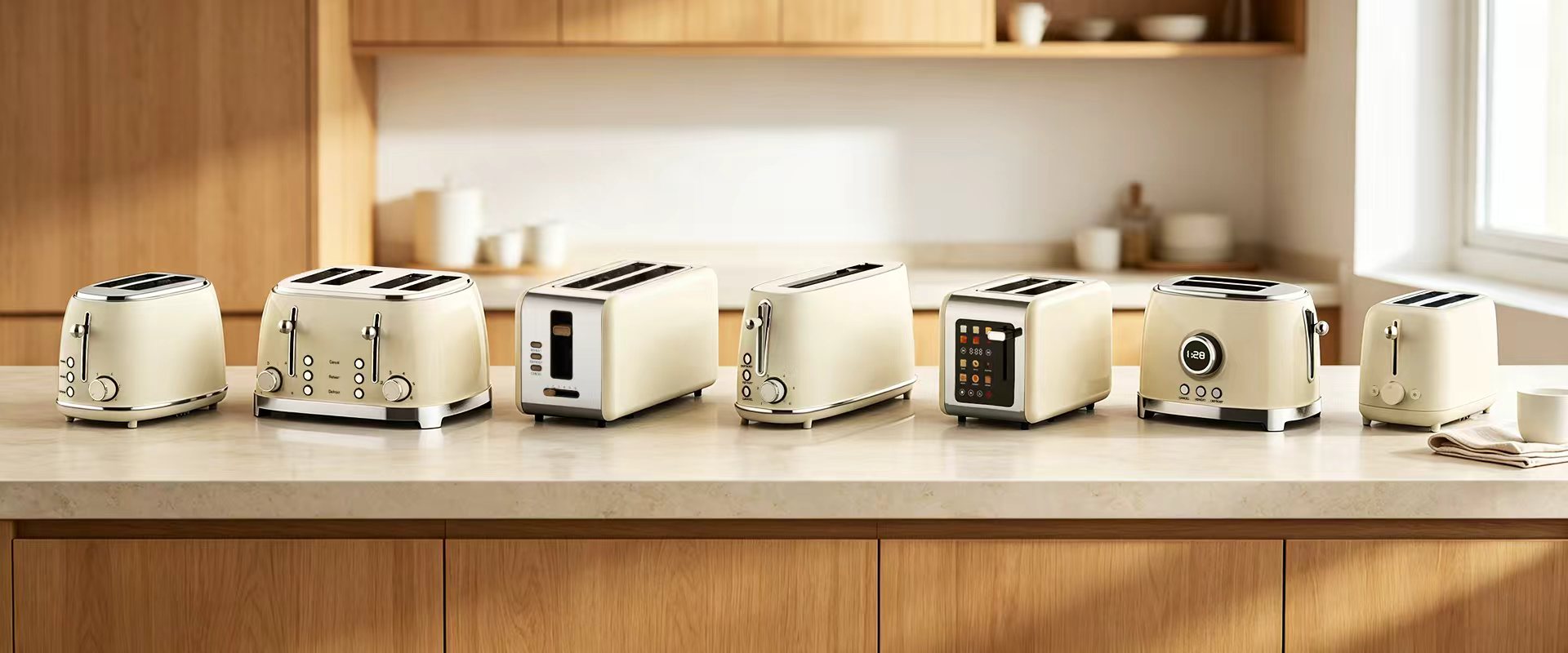
At Bestone, we manufacture small kitchen appliances in Jiangmen, Guangdong, China. Our toaster range includes standard two-slice and four-slice models, long-slot designs, digital controls, touchscreen models, and plastic-housing options. We also offer OEM and ODM customization for buyers looking to develop products under their own brands.
In this guide, we will walk you through the key decisions involved in sourcing toasters, from product materials and capacity to quality checks, customization, and supplier selection.
1. What Should You Consider Before Sourcing Toasters for Your Business?
Before comparing individual models, take a step back and think about what your business actually needs. A toaster that sells well in one market may not be the right fit for another. Your customers, sales channels, and target price range should guide your decisions from the beginning.
1.1 Who Are Your Target Customers?
Start with the people who will eventually use your products. Are you selling to budget-conscious households, consumers looking for stylish kitchen appliances, or customers who prefer more advanced features?
Different customer groups tend to prioritize different things. Some want a simple toaster at an affordable price. Others are willing to pay more for a modern design, digital controls, or additional cooking programs.
If you are a distributor serving several customer segments, consider building a balanced range rather than relying on a single model.
1.2 Which Sales Channels Will You Serve?
Your sales channel can influence which toaster models make the most sense.
For example, a retailer selling entry-level household appliances may prefer straightforward models with practical features and accessible pricing. An online brand may put more emphasis on product appearance, distinctive designs, and clear feature descriptions. A distributor serving multiple retailers may need a broader selection to accommodate different budgets.
Think about your existing product portfolio, too. If you already sell electric kettles or blenders, a toaster with a complementary design or matching color scheme may help you create a more consistent kitchen appliance collection.
1.3 How Can You Build the Right Toaster Product Mix?
You do not necessarily need a large number of SKUs to cover your market effectively.
A practical starting point is to compare three product levels: basic models for price-sensitive customers, mid-range models with additional convenience features, and premium models with digital controls or more advanced functions.
The right balance depends on your market research and expected sales. Start with the models that best match your customers, then expand your range when sales data or customer feedback shows a clear opportunity.

2. Which Toaster Housing Material Is Best for Your Target Market?
The housing material affects more than appearance. It can influence the product's shape, weight, finish, manufacturing process, and overall market positioning. Instead of assuming one material is always better, compare the available options against your target price and design requirements.
2.1 Are Plastic Toasters a Good Choice for Budget-Friendly Markets?
Plastic-housing toasters can be a practical option for mass-market retail and price-sensitive product lines. They are generally lightweight and offer flexibility in colors and exterior styling.
For buyers developing a private-label range, color options can also help distinguish a product from competing models without necessarily changing its core design.
However, material choice should never be based on price alone. Ask about the housing material's heat resistance, the product's thermal design, and the relevant safety test requirements for your target market.
Bestone's product range includes plastic toasters, such as the T10 series shown in our existing catalog. Buyers should confirm the specifications and customization options of the individual model before placing an order.
2.2 Should You Choose Stainless Steel or Painted Metal Toasters?
Metal-housing toasters can appeal to customers who prefer a more substantial appearance or a different finish from conventional plastic models.
Stainless steel and painted iron are not interchangeable, though. They have different material properties and may require different forming and finishing processes. The final appearance also depends on the construction method and surface treatment.
Bestone's existing range includes assembled square-style metal designs and one-piece formed designs. These offer different visual directions for buyers planning their product collections.
When comparing models, ask the manufacturer to confirm the exact housing material, surface finish, cleaning recommendations, and available colors. This will help you compare products on a consistent basis.
2.3 How Can Housing Design Support Your Brand Identity?
For a private-label brand, appearance is often an important part of product positioning. A toaster's shape, color, control layout, and surface finish all contribute to how customers perceive it.
A simple design may work well for a broad retail audience, while a distinctive finish or coordinated color palette may help a product stand out in a more design-focused collection.
Bestone offers customization options that include product colors, brand logos, and packaging, subject to project requirements and feasibility. Before moving into production, confirm the available options, any associated costs, and whether a physical sample is needed for approval.


3. Which Toaster Size and Capacity Will Your Customers Prefer?
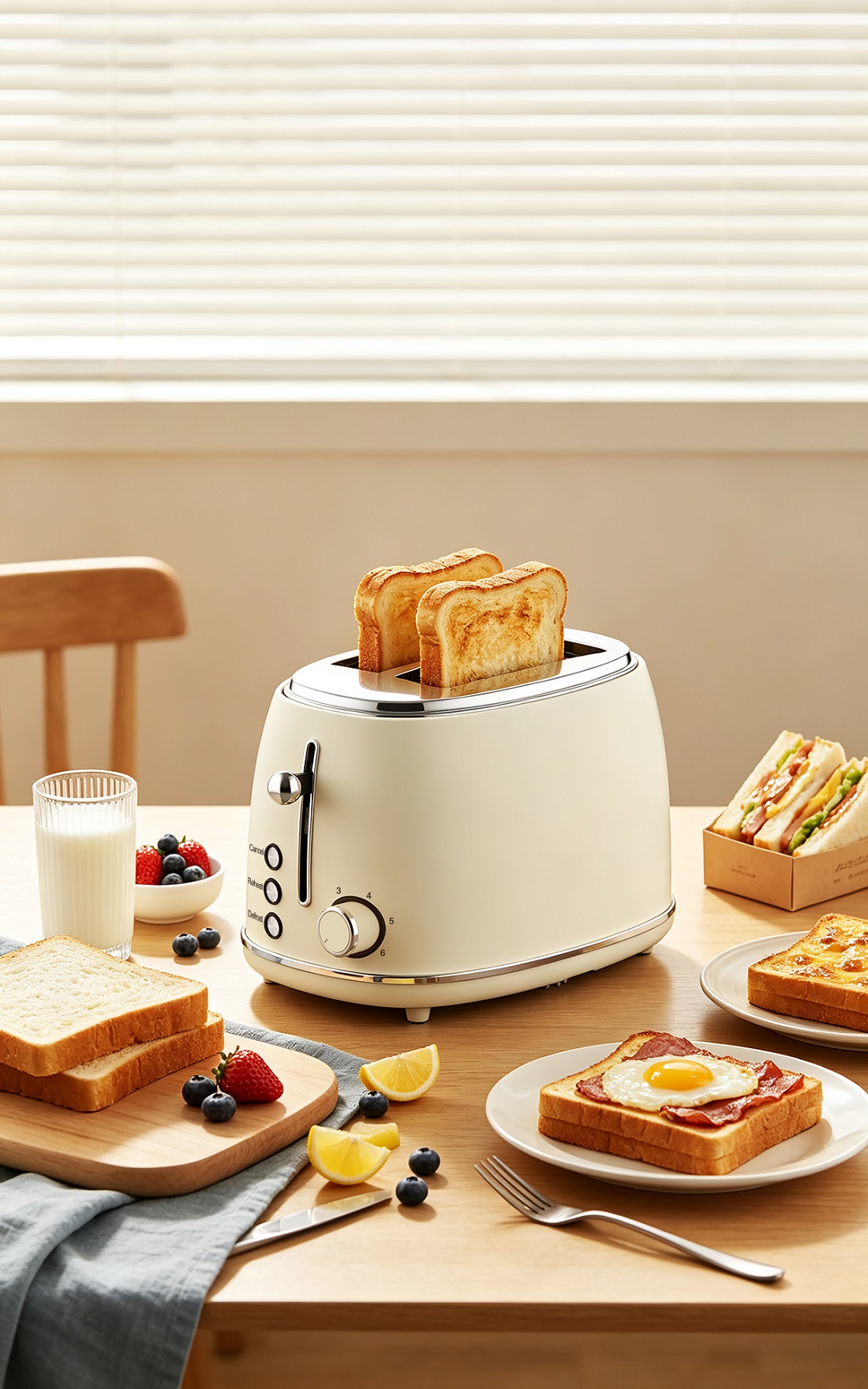
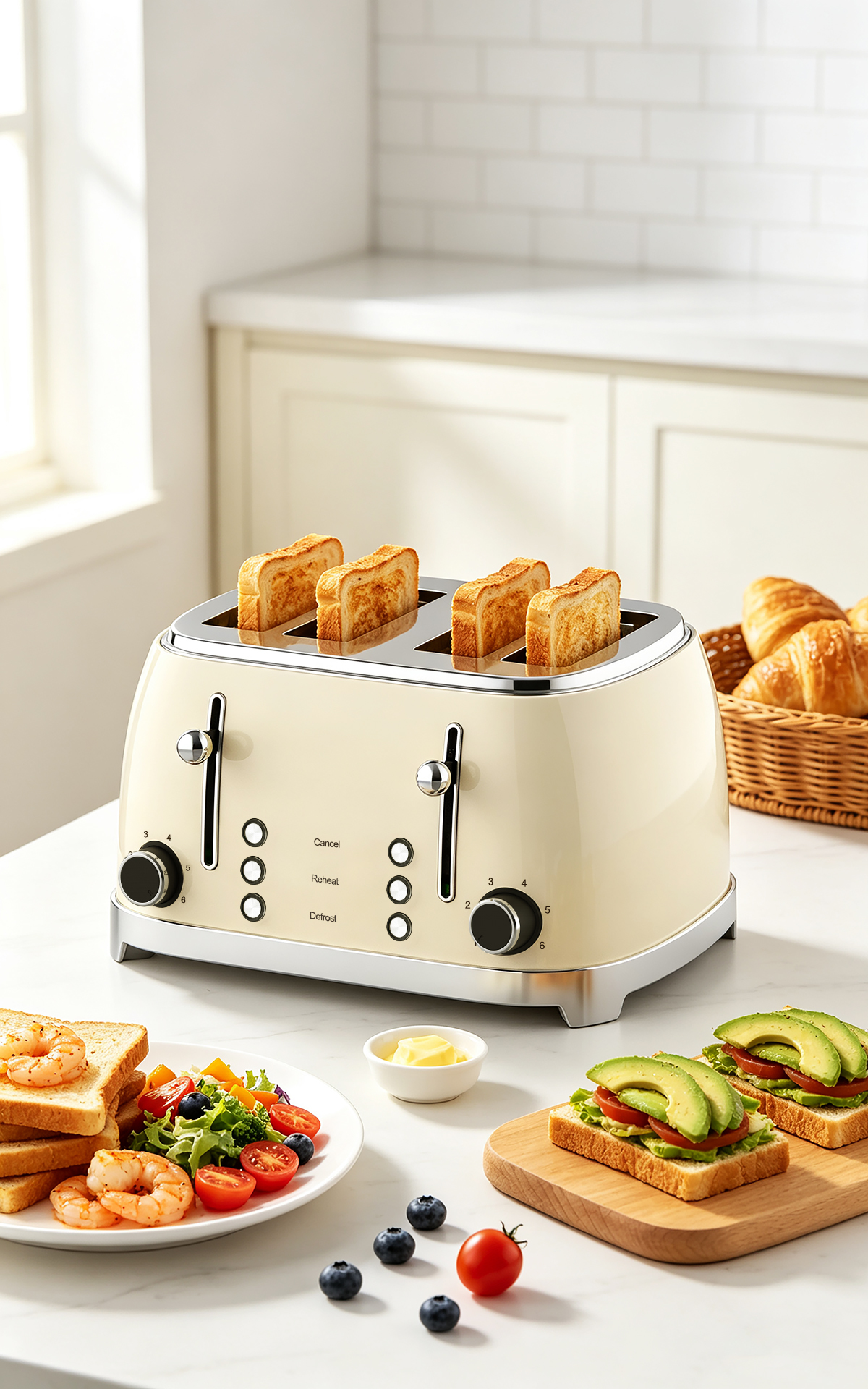
Capacity is one of the easiest ways to organize a toaster product range. Bestone's catalog includes standard two-slice and four-slice models, as well as single and dual long-slot designs. Each format serves a slightly different set of preferences.
3.1 When Should You Choose a Two-Slice or Four-Slice Toaster?
A two-slice toaster is a straightforward option for everyday household use. Its relatively compact format can suit customers who have limited counter space or who usually prepare smaller quantities of toast.
A four-slice toaster offers greater simultaneous capacity. It may be more suitable for larger households or customers who regularly prepare breakfast for several people.
For wholesalers and retailers, these two formats can form a useful starting point for a product assortment. The final choice should also account for product dimensions, rated power, target price, and the expectations of your market.
3.2 Could a Long-Slot Toaster Help You Reach a Different Market?
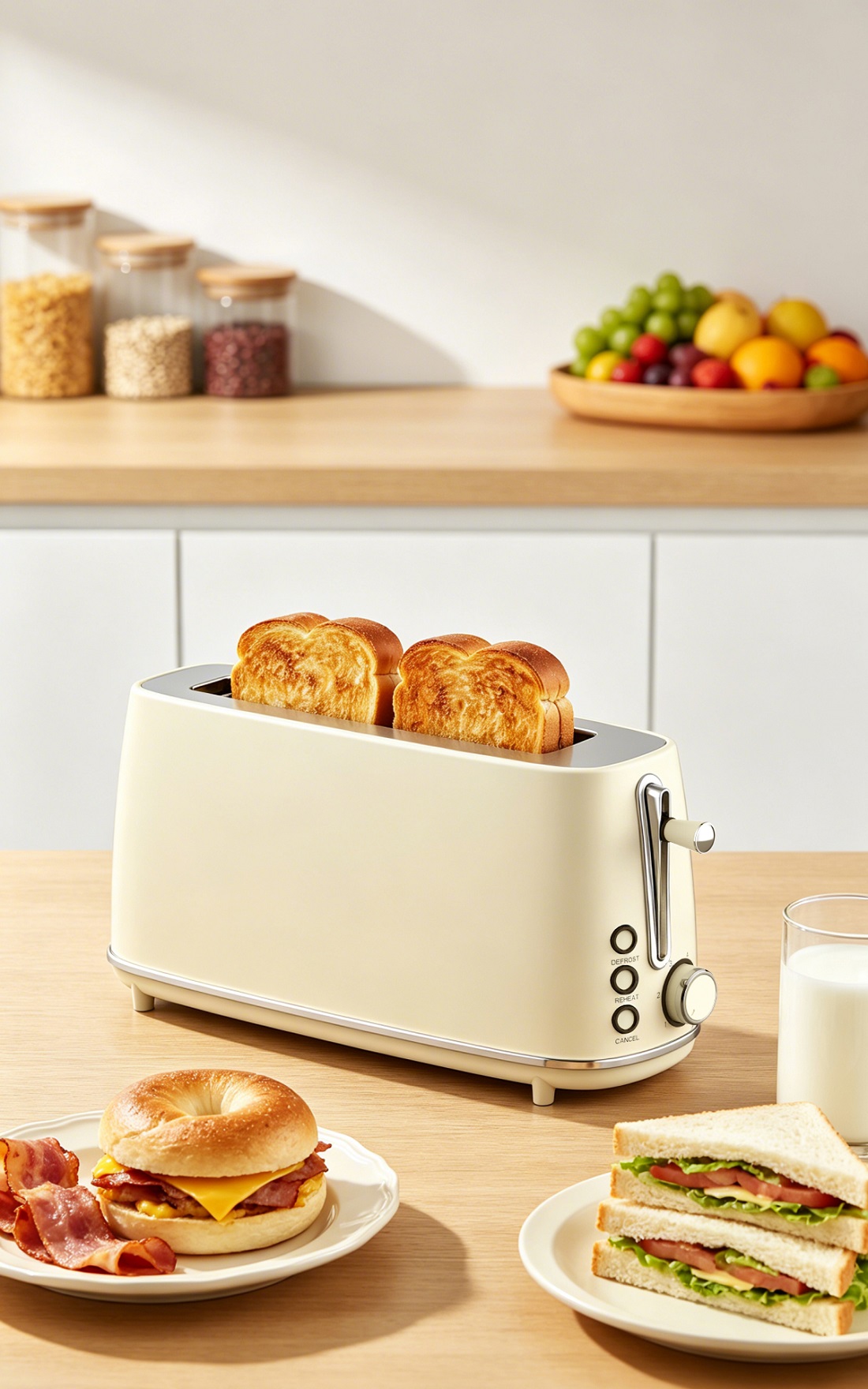
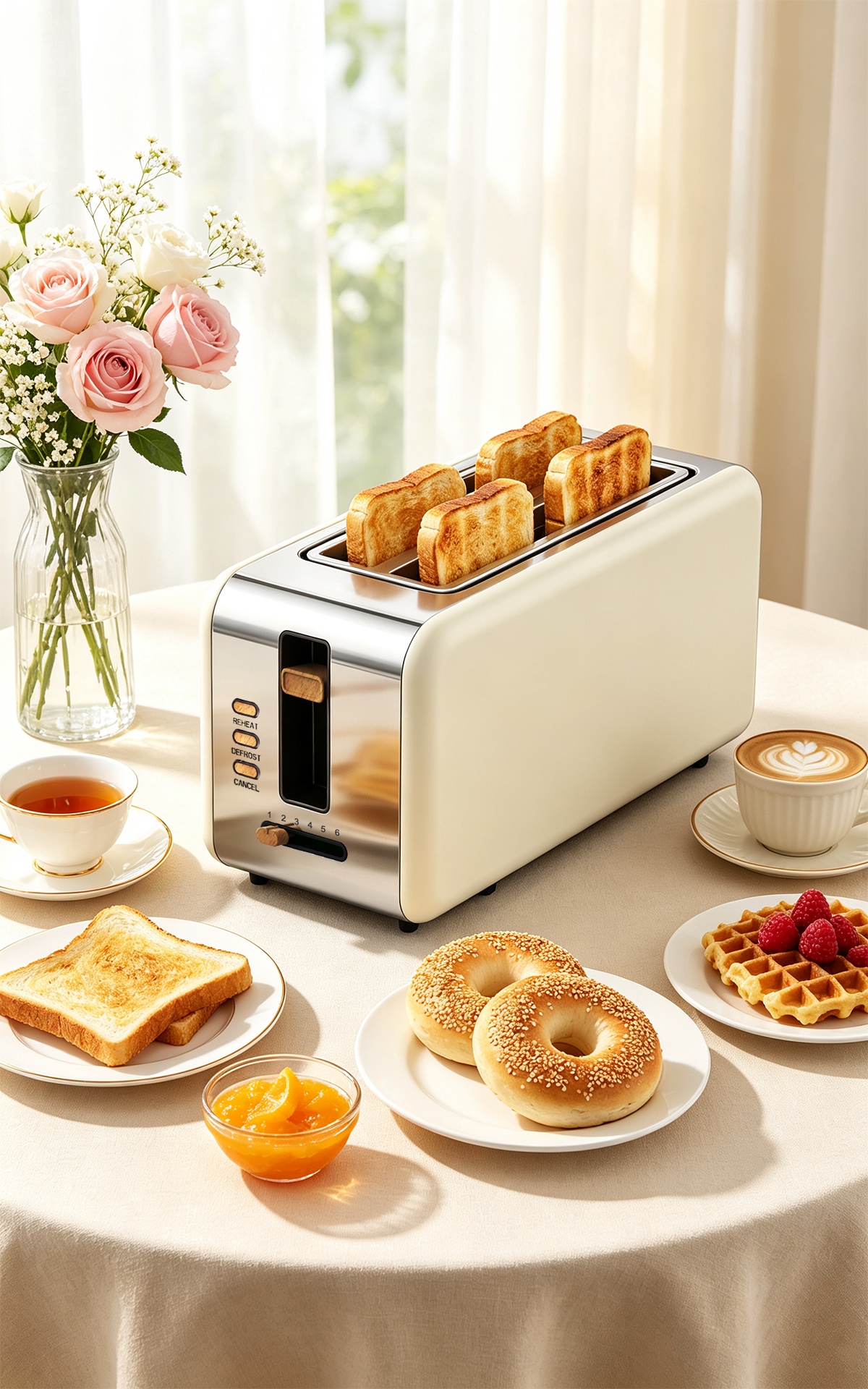
Long-slot toasters offer a different approach to capacity and bread compatibility. Depending on the slot dimensions, they may accommodate longer slices or certain bread styles that do not fit comfortably in conventional slots.
Bestone's catalog includes single long-slot and dual long-slot models. A single long slot can accommodate up to two standard slices side by side in the configurations described in our existing product guide, while dual long-slot models offer capacity for up to four standard slices.
These capacities should be verified against the specifications of the individual model. Slot length and width matter, especially if your customers commonly use artisan bread or other non-standard slices.
3.3 How Should You Match Toaster Capacity to Expected Demand?
Choosing a larger toaster is not automatically the best decision. A bigger model may offer more capacity, but it can also require more counter space and a different price position.
Consider how your target customers use their kitchens, how much space they typically have, and what they are willing to pay. If you are uncertain, compare samples of different formats and gather feedback from your sales team or test customers.
For many household appliance assortments, two-slice and four-slice models are sensible core options, while long-slot designs can add variety for customers with more specific preferences.
4. Should You Choose a Mechanical, Digital, or Touchscreen Toaster?
Control type is another useful way to distinguish products within your range. A basic control system may be perfectly adequate for one customer group, while another may appreciate a display, countdown timer, or more specialized programs.
The goal is to choose features that customers will actually value, rather than adding complexity simply to make a product look more advanced.
4.1 What Makes Mechanical Toasters a Practical Entry-Level Option?
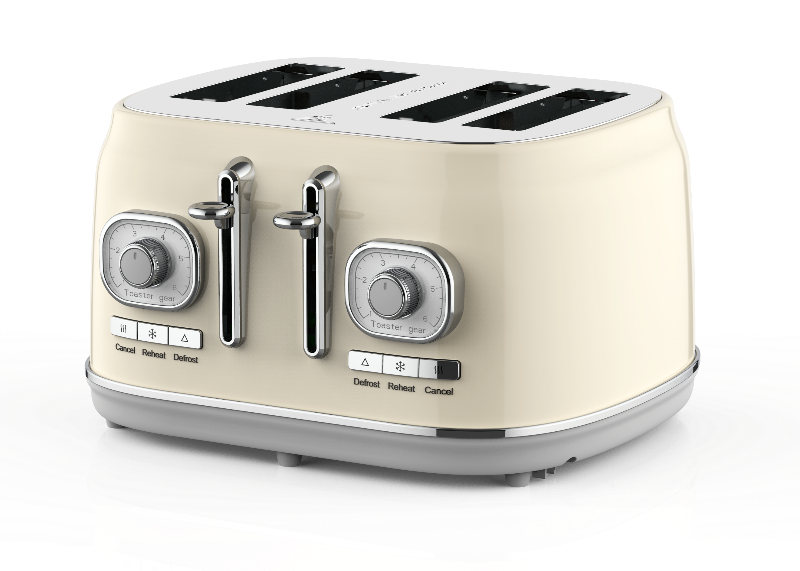
Mechanical toasters typically use straightforward physical controls that are easy for customers to understand. Depending on the model, features may include browning adjustment, defrost, reheat, and cancel functions.
Their simple operation can make them suitable for mainstream retail channels and customers who prefer familiar controls.
When evaluating a mechanical model, look at the actual functions, control feel, browning adjustment range, and ease of cleaning. These practical details are often more useful than a long list of features that customers may rarely use.

4.2 When Is a Digital Toaster Worth the Extra Investment?
Digital controls can offer additional convenience, such as a countdown display or more precise timing information.
Bestone's existing range includes digital models such as the T03D. The specific control configuration and functions should be checked on the relevant product page.
For buyers considering this category, the main question is whether the extra functionality supports a higher target price or meets a clear customer need. A digital display can be appealing, but it should be considered alongside product cost, usability, and the positioning of competing products.

4.3 Can Touchscreen Toasters Help Differentiate a Premium Product Line?
Touchscreen models offer a more contemporary appearance and can support a feature-focused product strategy. Depending on the model, they may include dedicated programs for different bread types or other preset functions.
Bestone's catalog includes touchscreen toaster options, including the T06B model family. Before selecting a particular configuration, ask the factory to confirm the available programs, control interface, supported functions, and applicable specifications.
Touchscreen products may suit brands looking to create a premium tier. However, the decision should still be based on your customers' preferences and your target retail price, rather than the assumption that more functions always lead to better sales.
5. Which Toaster Features Matter Most to Your Buyers?
Once you have chosen the basic size and control type, look more closely at individual features. A useful product comparison should explain what each function does and why a customer might want it.
5.1 Do Adjustable Browning Levels Meet Your Customers' Needs?
Browning control allows users to choose how lightly or deeply they want their bread toasted. It is a familiar feature, but the number of settings does not tell the whole story.
A toaster with several adjustment levels still needs to deliver results that meet customer expectations. Ask for sample testing and compare the browning consistency across different settings.
For your product line, consider both the available adjustment range and how easily users can select their preferred result.
5.2 Are Defrost, Reheat, and Cancel Functions Essential?
These functions can add practical value to an everyday toaster.
Defrost is intended for frozen bread, reheat helps warm toast again, and cancel allows the user to stop a cycle before it finishes. Their usefulness will depend on the needs of your target customers and the specific product design.
If you are comparing entry-level models, check which functions are included as standard. For higher-priced products, consider whether additional programs provide enough value to justify the difference in cost.
5.3 Which Convenience Features Make a Difference in Daily Use?
Some of the most useful details are easy to overlook when comparing product photos.
A removable crumb tray can make routine cleaning easier. Bread-centering mechanisms can help position slices within the toasting area. Clear indicators and accessible controls can make everyday operation more convenient.
Cord storage and exterior dimensions may also matter to customers who want to keep their kitchen counters organized.
Create a feature checklist before comparing quotations. That way, you can evaluate models consistently and avoid paying for features that do not fit your product strategy.

6. How Should You Compare Toaster Power and Electrical Specifications?
Electrical specifications are essential when sourcing appliances for international markets. Two models that look similar may not be suitable for the same destination, so this information should be confirmed before samples are approved or bulk orders are placed.
6.1 How Do Wattage and Voltage Affect Product Selection?
Voltage and rated power describe different aspects of a toaster's electrical requirements.
Bestone's current product guide lists 850 W for its standard two-slice and single long-slot formats, and 1,500 W for its four-slice and dual long-slot formats. These are reference specifications from the existing guide, not a guarantee that every model follows the same configuration.
Always confirm the rated voltage, frequency, wattage, and model-specific technical data with the factory before ordering. Do not assume that a specification from one model applies to another.
6.2 Which Plug Types and Electrical Requirements Should You Check?
Plug configuration and electrical requirements vary by destination market. Before ordering, identify the plug type required, the local power supply, and any applicable electrical safety or labeling requirements.
If you need a specific plug, thermostat configuration, or other electrical customization, discuss it with the manufacturer before finalizing the quotation.
Bestone's toaster category page lists plug types and thermostats among its customization options. Availability, feasibility, and compliance implications should be confirmed for the particular project.
6.3 How Can You Verify That a Toaster Meets Local Compliance Requirements?
Do not leave compliance checks until the goods are ready to ship.
First, identify the rules that apply in your destination market. Then confirm which certificates, test reports, technical documents, labels, and other records are required for the exact product model.
A manufacturer's general statement about certifications is not enough to establish that every model meets every market's requirements. Ask to review the relevant documentation and verify that it covers the product you intend to import.
This step is particularly important for distributors and private-label brands, which may have their own product approval and documentation procedures.

7. How Can You Evaluate Toaster Quality Before Placing a Bulk Order?
A product photograph and a quotation can tell you only so much. Before committing to a large order, take time to evaluate the sample and agree on what acceptable quality means for your business.
7.1 What Should You Check When Testing a Toaster Sample?
Start with the basics: appearance, dimensions, controls, power cord, plug, and overall assembly. Then test the functions listed in the product specifications.
Pay attention to browning consistency, the operation of the controls, crumb tray fit, ease of cleaning, and any unusual behavior during normal operation.
If your customers are particularly sensitive to appearance, check color consistency and surface finish as well. Record your observations so that your team can compare different samples using the same criteria.
7.2 Which Manufacturing and Quality Control Details Matter Most?
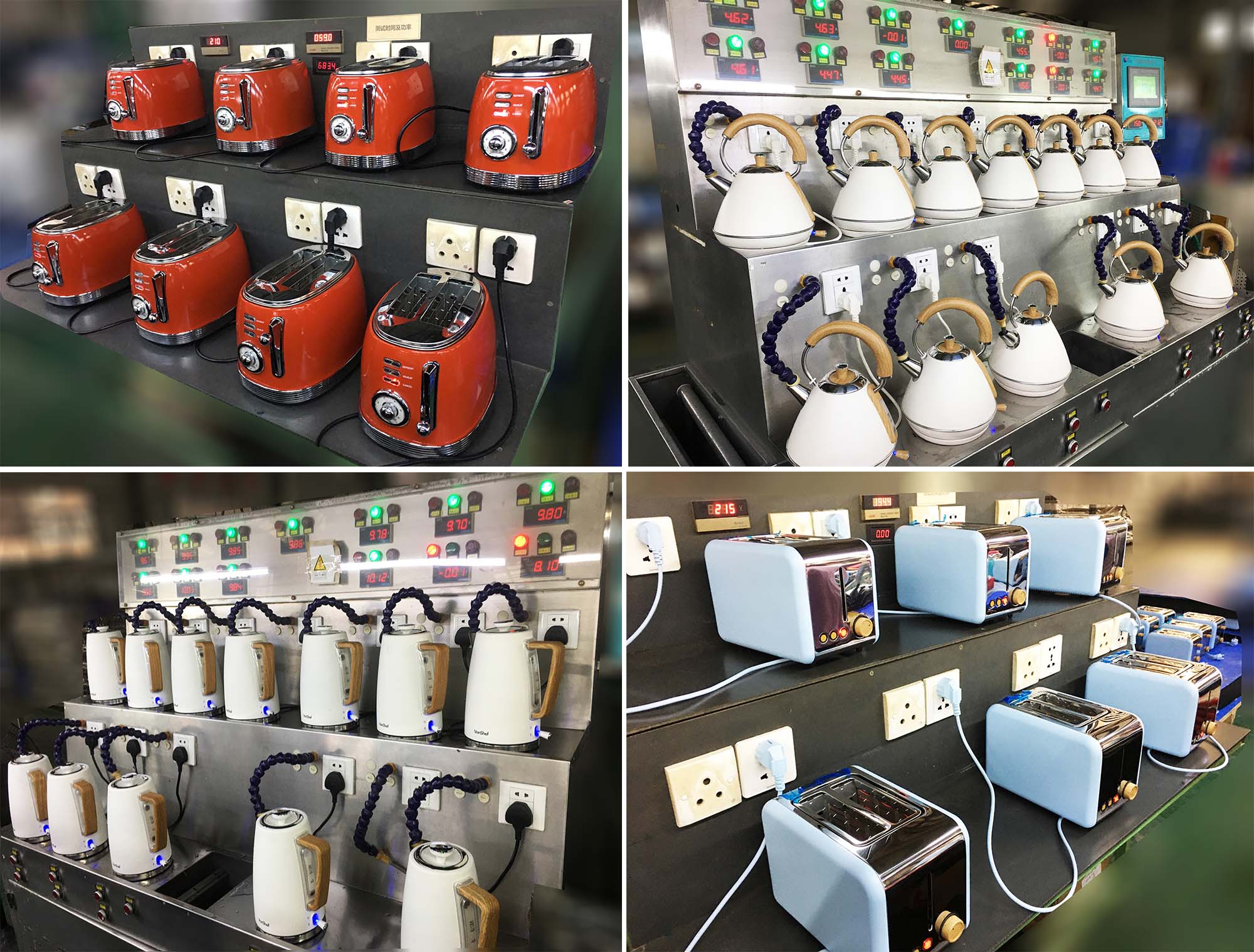
Ask the factory how it checks incoming components, manages assembly, verifies product functions, and inspects finished goods.
Bestone's website describes in-house manufacturing activities that include tooling development, molding, plastic injection, assembly, and testing. These capabilities can be relevant when discussing product development and production coordination with the factory.
However, the quality process should be evaluated through specific procedures and evidence. Ask which tests apply to your chosen toaster, how inspection results are recorded, and what standards will be used for your order.
7.3 How Can You Reduce Quality Risks in Mass Production?
One of the most useful steps is to approve a reference sample before mass production begins.
The approved sample should match the agreed product specifications, appearance, functions, and packaging requirements. Both sides should also agree on inspection criteria and how any nonconforming products will be handled.
For larger orders, consider a documented inspection plan and pre-shipment checks appropriate to the product and commercial agreement. Clear expectations established early can help prevent misunderstandings later.
8. How Should You Calculate the Total Cost of Sourcing Toasters?
A competitive unit price is important, but it is only one part of the purchasing decision. To compare suppliers fairly, look at the total cost of getting a product ready for sale in your market.
8.1 Is the Lowest Unit Price Always the Best Deal?
Not necessarily. A lower quotation may reflect a different material, feature set, packaging specification, or order arrangement.
When comparing offers, make sure you are evaluating equivalent products. Check the same capacity, electrical specifications, functions, accessories, packaging, and quality requirements.
A slightly higher-priced model may be a better fit if it matches your customers' expectations and supports your target retail position. The best choice is the one that makes commercial sense for your business, not simply the one with the lowest initial price.
8.2 Which Additional Costs Should Importers Include in Their Budget?
Depending on the project, the total sourcing cost may include samples, customization, packaging, testing, freight, insurance, duties, and other import-related expenses.
Some projects may also involve tooling or development costs. Whether these apply depends on the degree of customization and the agreement with the manufacturer.
Ask suppliers to clarify what their quotations include and exclude. Confirm the applicable trade terms and destination-related costs before calculating your landed cost.
8.3 How Can You Balance Product Features and Profit Margins?
Start with your target retail price and work backward. Consider your distribution margin, retailer margin, expected selling expenses, and the price customers are likely to accept.
Then decide which product features are essential and which are optional.
For example, a straightforward mechanical model may fit a value-focused range, while a digital or touchscreen model may support a higher price tier if the market values its functions. Your assortment should reflect evidence about your customers, not assumptions about which product category is most attractive.

9. Should You Choose OEM or ODM Toaster Manufacturing?
If you are building a private-label brand or expanding an existing appliance range, OEM and ODM arrangements can offer different ways to develop your products. Understanding the distinction will help you explain your requirements to a manufacturer.
9.1 When Is OEM Manufacturing the Right Choice for Your Brand?
OEM manufacturing may be appropriate when you already have a defined product design, technical specification, or approved model that you want a factory to manufacture.
Your team may have established requirements for appearance, branding, packaging, electrical configuration, or other product details.
Before starting, clarify which specifications the factory will follow, what information you need to provide, and how design changes or intellectual property will be handled under the agreement.
9.2 How Can ODM Services Help You Develop a Toaster Product Line?
ODM projects can be useful when you want to build on an existing product design or work with a manufacturer's product development capabilities.
Instead of developing every detail independently, you may be able to select a suitable model and discuss changes within the factory's available customization scope.
Bestone offers OEM and ODM services for its kitchen appliance business. The available development options, lead times, and costs depend on the specific product and project requirements.
9.3 Which Customization Options Should You Discuss with the Factory?
Customization can involve more than placing a logo on an existing product.
Depending on feasibility, you may want to discuss exterior colors, brand logos, gift boxes, packaging artwork, plug types, thermostats, and other agreed specifications. Some changes may require additional development or testing.
Before requesting a quotation, prepare a short brief that describes your target market, preferred product, required changes, estimated order quantity, and launch schedule. A clear brief makes it easier for the factory to assess the project and identify any questions that need to be resolved.

10. How Can You Choose a Reliable Toaster Manufacturer?
The right supplier should do more than provide an attractive catalogue. You need a manufacturing partner that can understand your specifications, communicate clearly, and support the requirements of your order.
10.1 What Should You Look for in a Factory's Production Capabilities?
Look at the factory's actual production processes, engineering resources, equipment, quality controls, and ability to manage the products you want to source.
Bestone's website describes a manufacturing site in Jiangmen, Guangdong, with tooling development, molding, plastic injection, assembly, and testing capabilities. The company also presents a broader kitchen appliance portfolio that includes electric kettles, blenders, coffee makers, and other small appliances.
For your own evaluation, ask which processes are handled in-house, which components come from external suppliers, and how production capacity is allocated to confirmed orders.
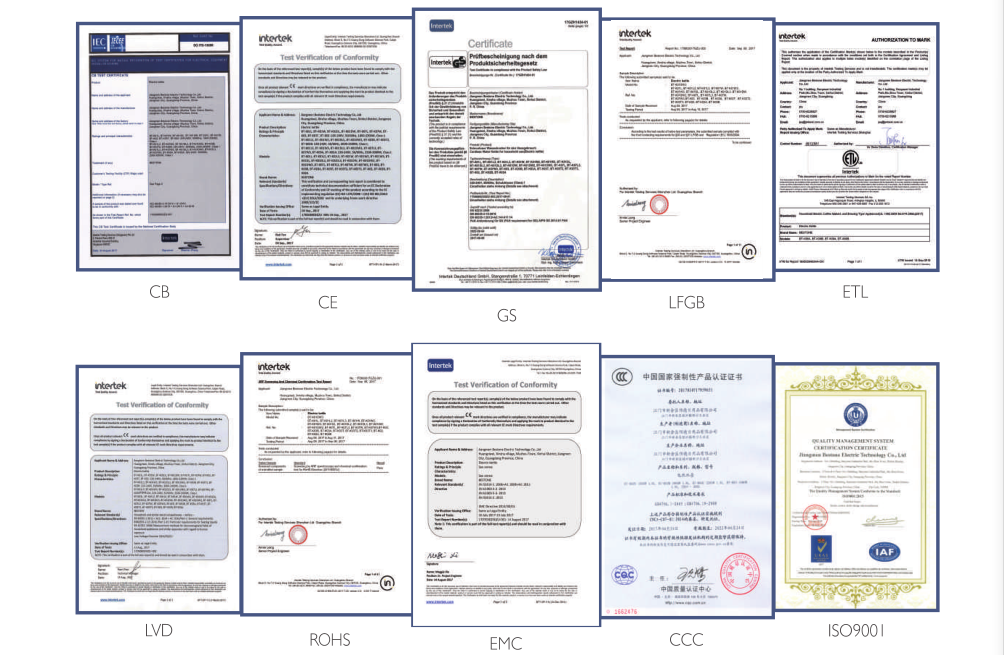
10.2 How Can You Verify a Supplier's Certifications and Export Experience?
Ask for relevant certification documents, test reports, and details of the markets the manufacturer serves.
Bestone's website lists several certification and compliance references, including CE, GS, ETL, CB, RoHS, LFGB, and FDA, as well as BSCI and ISO 9001 references for its factory. These references should be checked against the specific product, applicable standard, issuing body, and intended destination market.
The important point is not simply whether a logo appears on a website. It is whether the supplier can provide the documentation you need for your product and sales channel.
10.3 What Makes Bestone a Potential Partner for Your Toaster Business?
Bestone focuses on small kitchen appliances and offers a toaster range covering multiple housing styles, capacities, and control types. This gives buyers several product directions to consider when building or expanding a collection.
The company also describes in-house product development and manufacturing capabilities, along with OEM and ODM services. For a buyer developing a private-label range, these may provide a useful starting point for discussions about model selection, customization, and production planning.
Rather than assuming every project will follow the same process, we recommend discussing your requirements directly with our team. That makes it easier to determine which existing models are suitable, what changes are feasible, and which specifications need to be confirmed before ordering.

11. What Should You Confirm Before Placing Your First Toaster Order?
Once you have selected a preferred model and supplier, the next step is to turn your expectations into a clear purchasing plan. A little preparation at this stage can save time and reduce confusion during production.
11.1 Which Product Specifications Should Be Finalized Before Ordering?
Confirm the model number, housing material, dimensions, capacity, rated voltage, wattage, plug type, control functions, color, and packaging requirements.
You should also identify any labeling, documentation, or testing requirements that apply to your destination market.
Put these details into a written specification and make sure both parties agree on the final version. If a sample has been approved, record how it relates to the production specification so that everyone is working from the same reference.
11.2 How Should You Confirm MOQ, Sample Approval, and Lead Time?
Minimum order quantity, sample arrangements, and production lead time can vary by model and customization level.
Ask the factory to specify the MOQ for your selected products, whether sample fees apply, and how long production is expected to take after the relevant approvals and order conditions are completed.
Bestone's homepage states that lead time can start from 40 days after order confirmation. Treat this as a general reference rather than a guaranteed delivery date for every project. Confirm the current schedule, production requirements, and shipping arrangements for your actual order.
11.3 What Should Your Purchase Agreement and Quality Plan Include?
A clear agreement should cover the product specifications, order quantity, pricing, payment terms, delivery arrangements, packaging, inspection requirements, and procedures for handling quality issues.
For customized products, it is also worth confirming the approved artwork, sample version, ownership of agreed designs, and the process for approving changes.
These details may seem administrative, but they help both the buyer and the manufacturer work toward the same result. A well-prepared order is easier to manage than one based on assumptions or scattered messages.

12. How Can Bestone Help You Find the Right Toaster for Your Business?
Choosing the right product becomes easier when you can compare several options with a clear understanding of your market and requirements. Bestone's toaster range offers a starting point for buyers looking for different capacities, housing styles, and control systems.
12.1 Which Bestone Toaster Models Match Your Product Strategy?
Begin by reviewing the available product categories on the Bestone Toaster Product Page.
You can explore two-slice and four-slice toasters, long-slot designs, touchscreen models, digital toasters, and plastic-housing options. The most suitable model will depend on your target price, customer preferences, technical requirements, and intended sales channel.
If several models look suitable, ask our team to help you compare their specifications and identify the differences that matter for your project.
12.2 What Information Should You Share When Requesting a Quotation?
You do not need to have every detail finalized before contacting a factory, but a few key pieces of information can make the discussion much more productive.
When requesting a quotation from Bestone, consider sharing:
-
Target market: The country or region where you plan to sell the product.
-
Product preference: Two-slice, four-slice, long-slot, digital, touchscreen, or another format.
-
Estimated order quantity: Your expected initial order and any future volume plans.
-
Technical requirements: Voltage, plug type, wattage, and relevant compliance needs.
-
Branding and packaging: Logo, colors, gift box, and other customization requests.
-
Target price and schedule: Your intended market position and preferred launch date.
If you are still comparing options, simply explain what you know so far. The remaining details can be discussed as the project develops.
12.3 How Can You Start Your Toaster Sourcing Project with Bestone?
Finding the right toaster is a process of matching product capabilities to business needs. The best starting point is a clear understanding of your customers, followed by a careful review of specifications, sample quality, costs, and supplier support.
At Bestone, we work with buyers interested in sourcing kitchen appliances and exploring OEM or ODM opportunities. If you are planning to add toasters to your product portfolio, we invite you to share your requirements with our team.
Visit our toaster product catalog to explore the available models, or contact Bestone to discuss product selection and sourcing requirements.
Tell us about your target market, preferred features, estimated quantity, and customization needs. We can then discuss suitable options and the next steps for your project.
Bestone Factory — A practical starting point for your next toaster sourcing project.
How Does a Small Kitchen Appliance Factory Turn an Idea into a Finished Product?
Bestone Innovative Color-Changing Glass Electric Kettle: Safety, Health and Durability Redefined