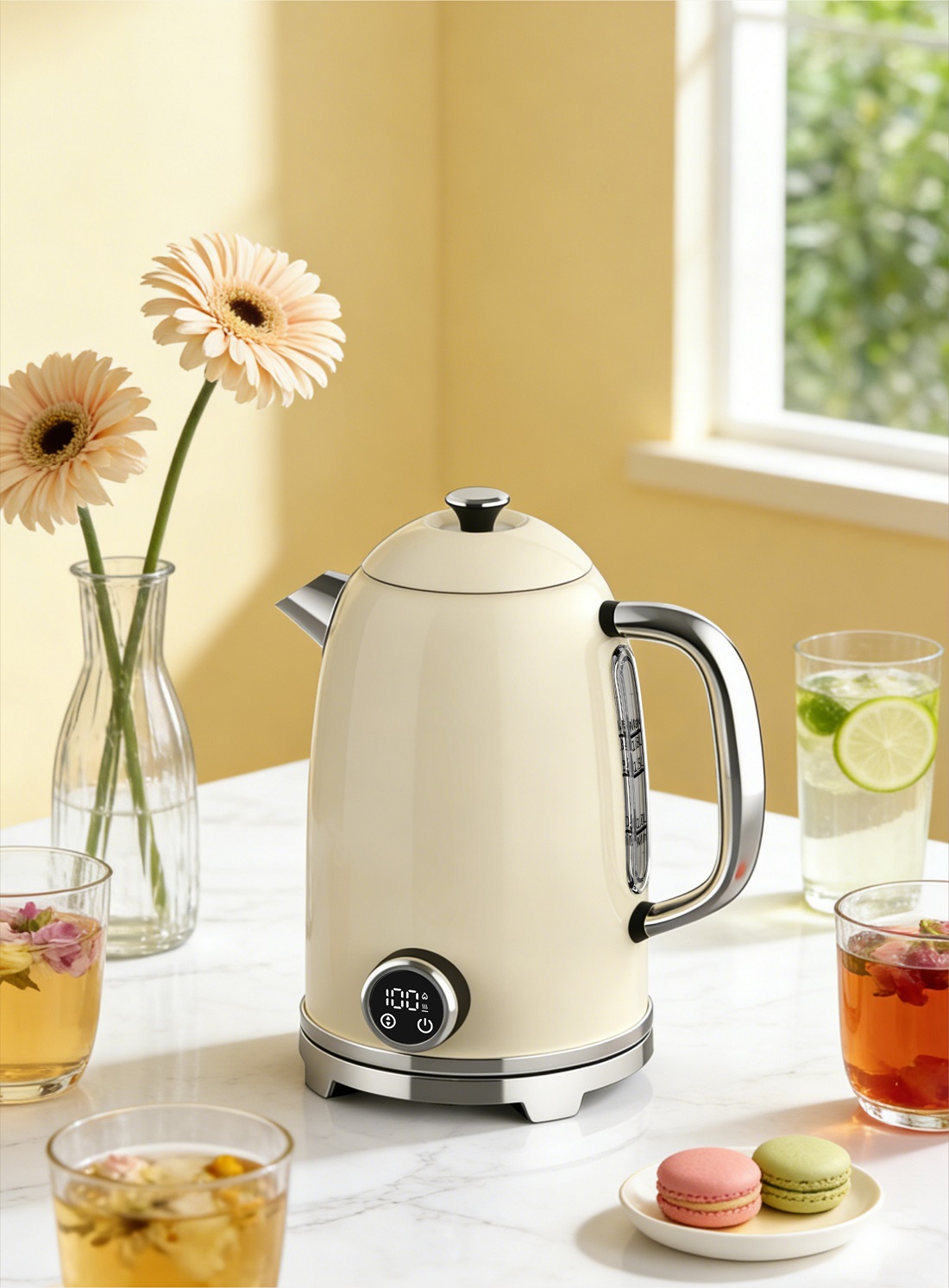
What Is the Safest Electric Kettle for Health? Material Test & Compliance Guide for Global B2B Buyers
What Is the Safest Electric Kettle for Health? Material Test & Compliance Guide for Global B2B Buyers
Published on jmbestone.cn | Kitchen Small Appliance Manufacturing Educational Blog
Why Do Safe Kettle Materials Determine Your Wholesale Profit?
Health-conscious consumers worldwide now rank material safety as the No.1 purchasing factor for electric kettles, according to Amazon’s 2026 Home Appliance Consumer Health Demand Survey. Over 68% of end users refuse to buy kettles without official food-contact test reports, while 42% of overseas brand buyers faced customs detention or consumer return losses due to unqualified low-cost kettle materials in 2025.
Most small trading suppliers only provide basic CE electrical certificates, lacking third-party lab data proving food-grade material safety. As a professional electric kettle OEM/ODM factory founded in 2017 in Jiangmen, Bestone owns an independent internal testing lab and full in-house production chain. This educational blog shares authentic SGS & TUV migration test data of four mainstream kettle liner materials, interprets global health compliance standards, and introduces our safe, customizable kettle solutions for distributors, retail brands and hotel procurement clients. All test data and regulatory references in this article come from authorized third-party institutions without fictional content.
Which Kettle Liner Material Is the Healthiest?
We simulated 10,000 accelerated boiling cycles (long-term daily household use) under SGS standard testing conditions, using 4% acetic acid solution to replicate acidic tea, lemon water and coffee brewing scenarios, complying with German LFGB §31 and US FDA 21 CFR 177.2600 migration testing protocols. Below are official test limits and real detection results of Bestone qualified materials:
1. Food-Grade 304 Stainless Steel (18Cr-8Ni, Industry Standard Safe Material)
Regulatory limits (LFGB): Nickel ≤0.02mg/dm², Chromium ≤0.1mg/dm², Lead & Cadmium = Not Detected
SGS Test Report No.SG25090128 Result: Nickel ND, Chromium 0.03mg/dm², Lead/Cadmium Undetected
- Safety advantage: Stable passivation film prevents heavy metal leaching under repeated boiling; no BPA, phthalates or microplastic risks
- B2B market share: 80% of global electric kettle bulk orders adopt 304 liner (Alibaba 2026 industry data)
- Upgrade option: 316L stainless steel with molybdenum, better anti-corrosion for hard water & commercial hotel high-frequency use

2. High Borosilicate Glass
Thermal expansion coefficient: 3.3×10⁻⁶/K, resistant to 150℃ instant cold-hot temperature difference (Schott AG lab standard)
Migration test result: All heavy metals, plastic additives, organic tin = Not Detected
- Safety advantage: Fully inert material, zero chemical dissolution into boiling water, visual water level easy to clean scale
- Shortcoming: Fragile for logistics and commercial heavy-use scenarios

3. Food-Grade Ceramic Liner
Compliance threshold (California Prop 65): Lead ≤0.8mg/L, Cadmium ≤0.07mg/L in 4% acetic acid immersion
Test result: Lead & Cadmium below detection limit, no harmful glaze dissolution
- Advantage: Excellent heat preservation, premium texture for high-end brand lines
- Risk reminder: Only fully glazed certified ceramic is safe; cheap unqualified glazed ceramic exceeds lead limits 3–10 times per SGS random inspection data
4. Ordinary Non-Food-Grade Plastic (PP/Tritan Budget Kettles)
SGS aging test data after 5,000 boiling cycles: Total plastic extractives reach 0.18mg/in², partial low-cost plastic releases trace phthalates & microplastics above FDA limits when heated over 90℃
- Health risk: Endocrine-disrupting substances accumulate with long-term repeated boiling
- B2B suggestion: Only use food-grade Tritan plastic for small portable travel kettles, avoid full-plastic liner for daily household models
Material Safety Priority Ranking (Lab Data Supported)
- High Borosilicate Glass ≈ Food-Grade 316L Stainless Steel (Premium Health Choice)
- Food-Grade 304 Stainless Steel (Cost-Effective Mass Market Safe Pick)
- Fully Glazed Certified Food-Grade Ceramic (High-End Niche Option)
- Ordinary Uncertified Plastic (Lowest Health Safety Level)

What Hidden Harmful Accessories Ruin Kettle Safety?
Even with safe kettle liners, unqualified sealing gaskets, steam channels and plastic connectors will introduce toxic substances into hot water. TUV Rheinland 2025 component test data shows 57% of cheap kettles use industrial silicone containing organic tin and excess peroxide residue.
Bestone Standard Matching Safe Accessories
- EPDM food-grade silicone sealing ring: Pass LFGB full test, organic tin & plasticizer Not Detected after 10,000 boiling cycles
- Water contact channel: All 304 stainless steel / glass, zero ordinary plastic touching boiling water
- Thermostat & shell plastic: Only FDA-certified food-contact plastic used for non-water-contact exterior parts
Electrical Safety Base for Long-Term Health Use
All our kettles fully comply with IEC 60335-2-15:2024 liquid heating appliance safety standard, requiring automatic boil-dry cut-off and overheat protection. Each heating core completes 700-hour continuous aging test in our factory lab to eliminate fire and overheating risks caused by component failure.

What Certificates Do Safe Kettles Need for Global Export?
Basic CE electrical marking cannot prove food material safety; regional food-contact certifications are the core clearance document for health-related inspection (Alibaba Seller Central 2026 Compliance Guide)
| Target Market | Must-Have Health Material Certifications |
| European Union | LFGB, RoHS, REACH; GS voluntary premium certification |
| USA & Canada | FDA 21 CFR 177.2600 food contact report, ETL safety |
| Middle East | LFGB material report + CB electrical certificate |
| Australia | RCM + LFGB migration test report |
Bestone factory holds ISO9001 quality system & BSCI factory audit certificates. All our electric kettle models can issue original SGS/TUV material migration reports under buyers’ private brand names for customs clearance and retail product labeling.

How Does a Source Factory Guarantee Kettle Health Safety?
Founded in 2017, our 30,000㎡ Jiangmen manufacturing plant owns over 300 production workers and 10 professional R&D electrical engineers, with monthly output over 150,000 electric kettles, 40-day standard mass order lead time. We control full production chains in-house: mold development, stainless steel stamping, silicone molding, assembly, aging testing and finished product inspection, no outsourcing of core water-contact components.
5-step strict QC workflow for health safety control:
- Raw material incoming inspection: Verify stainless steel, glass, silicone SGS batch reports before warehousing
- Semi-finished high-temperature simulation boiling test for material stability screening
- 700-hour continuous aging test for heating elements and thermostat safety
- Full finished product function inspection: Boil-dry protection, auto shut-off, no plastic water contact leakage
- Random sampling third-party lab retest before container loading for bulk orders
Custom Safe Kettle OEM & ODM Solutions
- ODM Fast Launch Safe Models: Ready stock 304 stainless steel / borosilicate glass kettles, customize LOGO, color, packaging with zero new mold cost, sample delivery within 7 working days
- OEM Exclusive Deep Customization: Develop full plastic-free water channel kettle, 316L liner premium models, custom capacity (0.5L–2.0L), constant temperature function and exclusive molds per brand demand
- Mixed container support: Pair safe electric kettles with toasters, blenders and coffee machines for one-stop kitchen appliance sourcing

Top Questions Global Distributors Ask About Safe Kettle Sourcing
Q1: Will food-grade 304 stainless steel release heavy metals and harm human health?
A: Per SGS LFGB migration test data, qualified 304 stainless steel forms a dense chromium passivation film on the surface, heavy metal migration volume is far below international legal limits, no health risks under normal boiling water use. Uncertified industrial 201 stainless steel is the main source of excessive nickel and manganese precipitation.
Q2: What material certificates do I need to clear EU & US customs?
A: EU requires LFGB food contact migration report + CE/RoHS; USA needs FDA 21 CFR material report + ETL electrical safety certificate. Bestone can provide full set original lab reports printed with your brand name.
Q3: Can I customize fully plastic-free health electric kettles for my premium brand?
A: Yes. Our R&D team can design full stainless steel/glass water channel kettles without any plastic touching hot water, complete LFGB/FDA testing under your brand for retail high-end positioning.
Q4: What’s MOQ & lead time for safe 304/glass electric kettles?
A: ODM stock safe models MOQ 500pcs per design, standard lead time 40 working days after deposit; OEM exclusive mold MOQ negotiable based on order volume.
Q5: For hotel commercial high-frequency use, 304 or 316L liner is safer?
A: 316L stainless steel is recommended for hotels with hard tap water, lemon tea & coffee daily brewing; its molybdenum composition resists acid and chloride corrosion better than standard 304, extending service life while maintaining stable low metal migration.
How to Source High-Margin Safe Kettles From Bestone Factory?
Consumers worldwide increasingly prioritize health and material safety, making certified food-grade electric kettles a high-margin core product for global B2B brands. Partnering with integrated manufacturers like Bestone eliminates material compliance risks, consumer complaints and customs detention losses.
Our core advantages for safe kettle sourcing:
- Full range of SGS/TUV health material test reports, traceable raw material batches
- Complete global market health certifications for EU, US, Middle East and Australia clearance
- In-house full production chain avoiding unqualified outsourced components
- Flexible ODM & OEM customization for plastic-free premium safe kettle lines
- Stable monthly 150,000-unit capacity to support large seasonal wholesale orders

Next Steps for Your Business
- Visit jmbestone.cn electric kettle product page to download full safe model catalog
- Contact our overseas sales team to request free SGS material test reports & customized quotation
- Book online video factory tour to inspect our aging lab and raw material testing workshop
- Submit your brand customization demand to get exclusive safe kettle sourcing plan
Reference Data & Regulatory Sources
- SGS Group Food Contact Migration Test Report No.SG25090128, 2025
- IEC International Standard 60335-2-15:2024 Safety of Liquid Heating Household Appliances
- German LFGB §30 & §31 Food Contact Material Testing Standards, TUV Rheinland
- U.S. FDA Title 21 CFR Part 177.2600 Food-Contact Metal & Rubber Material Rules
- Alibaba Seller Central 2026 Global Small Kitchen Appliance Compliance Guidance
- Food and Fermentation Industries Journal, 2022 Study on Stainless Steel Heavy Metal Migration
- Amazon 2026 Global Home Appliance Consumer Health Demand Survey

electric kettle OEM, custom electric kettle, LFGB electric kettle, electric kettle factory China
How to Source Safe, High-Margin Electric Kettles Directly From China Factory: Complete OEM & ODM Guide With Lab Test Data