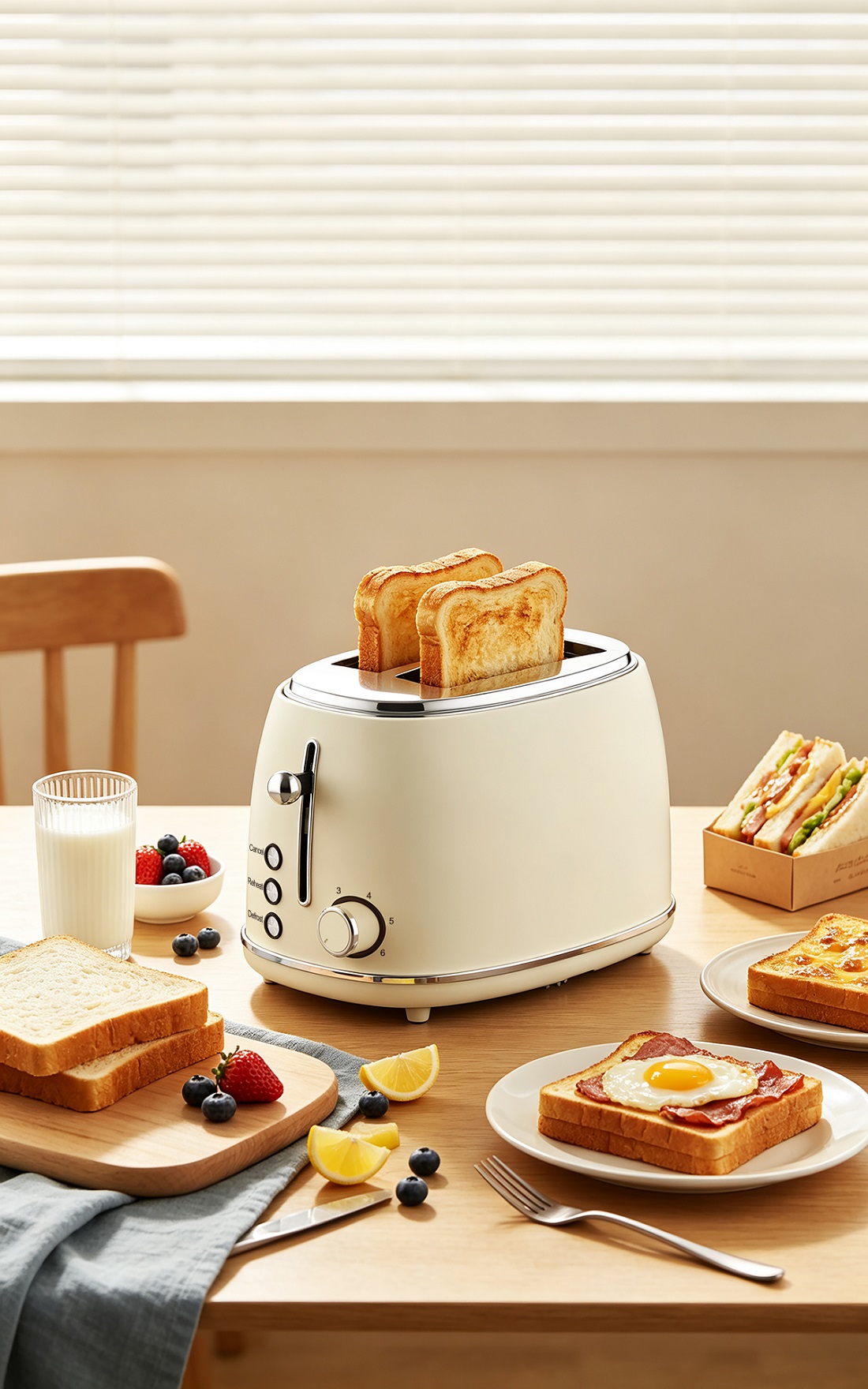
Why does material choice determine the service life of household toasters?
Why does material choice determine the service life of household toasters?
Household toasters show a surprisingly wide gap in actual service life: entry-level models often fail within 12 to 18 months, while well-built premium units can operate reliably for 5 years or more. For many consumers and even some bulk buyers, this gap is often mistaken as a difference in “brand quality”, but at the manufacturing level, the root cause almost always traces back to raw material selection.
According to a 2025 reliability survey from Which? UK, 68% of early toaster failures are directly linked to material degradation, not accidental damage or user misuse. For B2B wholesale distributors and private-label brands, this means material choice is not just a detail of product specification — it directly determines after-sales return rates, end-user satisfaction and long-term brand reputation. As a professional OEM/ODM manufacturer of kitchen small appliances including toasters, electric kettles and blenders, Bestone breaks down how key material choices shape toaster service life, and what buyers should verify during sourcing.

1. Heating Element Material: The Core Lifespan Limiter
The heating element is the heart of a toaster, and its material quality is the single biggest factor affecting total service life.
Nearly all pop-up toasters use nichrome heating wires, but grade varies dramatically. High-quality toasters use Ni80Cr20 (80% nickel, 20% chromium) nichrome alloy, which forms a stable protective oxide layer at high temperatures, resisting oxidation and embrittlement. Low-cost models often use low-nickel recycled alloy or even pure iron-chromium wires, which oxidize rapidly under repeated high-temperature cycles.
SGS 2025 component aging test data shows that premium Ni80Cr20 heating wires maintain less than 5% power attenuation after 5,000 full heating cycles, while low-grade wires show over 22% power decay and frequent breakage under the same test conditions. Once the heating wire oxidizes and breaks, the toaster is effectively irreparable for most end users.
Beyond the wire itself, the insulating supports that hold the heating element also matter. Ceramic supports withstand repeated heating without degradation, while low-grade plastic or mica supports crack and crumble over time, causing short circuits or uneven heating.

2. Chamber & Internal Liner Materials: Corrosion and Thermal Fatigue
The toasting chamber material affects both hygiene and long-term structural integrity, which in turn impacts heating element lifespan.
Budget toasters commonly use ordinary cold-rolled steel or thin tin-plated metal for the inner chamber. After months of repeated heating and exposure to moisture and bread crumbs, these materials rust, flake and corrode. Rust particles can fall onto heating wires, causing local hot spots and accelerated wire failure. According to the 2025 Small Kitchen Appliance After-sales Quality Report from China Household Electrical Appliances Association (CHEAA), 32% of late-stage toaster malfunctions stem from chamber corrosion that damages heating elements.
Premium production designs use food-grade 304 stainless steel for the inner chamber. Stainless steel resists corrosion and high-temperature fatigue, maintaining structural integrity for years. Mirror-finish stainless steel liners also reflect heat more evenly, reducing thermal stress on heating wires and extending element life in the process.

3. Pop-Up Mechanism Materials: Resistance to Mechanical Fatigue
The spring-loaded pop-up mechanism is one of the highest-failure components in low-end toasters, and material selection directly determines its endurance.
The mechanism relies on a spring, latch and lever to lift bread and cut power. Low-cost toasters use low-grade ordinary steel springs that lose tension quickly. After just 1,500 to 2,000 use cycles, spring fatigue leads to incomplete popping, stuck levers or failure to trigger auto shut-off.
Per EN IEC 60335-2-9:2023 safety and endurance standards, qualified household toasters must complete no less than 5,000 full operation cycles without mechanical failure. To meet this standard, manufacturers like Bestone use high-carbon spring steel with heat treatment, which maintains over 90% of its original tension after 5,000 cycles. Plastic lever and latch components also matter: heat-resistant engineering plastics retain shape and strength long-term, while cheap recycled plastic warps and cracks under repeated heat exposure.

4. Housing & Plastic Component Materials: Thermal Aging Resistance
Outer housing and control parts may seem cosmetic, but their material quality directly affects long-term structural integrity and safety.
Low-end toasters often use filled or recycled plastic for the outer body, handle and control knobs. Under sustained high-temperature exposure, these materials discolor, become brittle, warp and crack. In severe cases, deformed plastic parts can jam the pop-up mechanism or create electrical safety risks.
Premium toasters use V-0 flame-retardant, heat-stabilized engineering plastics. These materials resist thermal aging, maintain mechanical strength and meet global fire safety standards. Industry comparative testing shows that heat-resistant plastic housings have 2.5 to 3 times the service life of ordinary recycled plastic equivalents under normal household use conditions.

5. Implications for Wholesale & Private-Label Buyers
For B2B buyers, choosing cheaper materials may reduce unit cost by 8% to 12% at the sourcing stage, but it almost always leads to higher after-sales costs, higher return rates and eroded brand trust over the product lifecycle.
Material-related failures rarely appear in the first month of use; they typically emerge 6 to 18 months after sale, when consumers have already left reviews and brands have already invested in marketing. For private-label brands building long-term market position, this makes material quality a far more important investment than short-term margin.
When sourcing toasters, buyers should verify:
- Raw material certificates of analysis (COA) for heating wires, chamber steel and spring components
- 5,000-cycle mechanical endurance test reports
- Third-party thermal aging test data for plastic components
- Compliance with IEC 60335-2-9 endurance requirements
As an OEM/ODM manufacturer focused on commercial and private-label kitchen appliance supply, Bestone builds all toaster models with traceable premium materials and publishes full endurance test data for every product line. We also support custom material configuration to match different market positioning and budget requirements.

Conclusion
The service life of a household toaster is not determined by brand name or appearance — it is built into the product through raw material selection at every component level. From the nichrome heating element and stainless steel chamber to the spring steel mechanism and heat-resistant plastics, each material choice contributes to total lifespan.
For wholesale distributors and private-label brands, prioritizing material quality over the lowest unit price is the most effective way to reduce return rates, improve customer satisfaction and build repeat business in the long run.

Reference (Data & Standard Sources)
- Which? UK. 2025 Small Kitchen Appliance Reliability & Lifespan Survey
- EN IEC 60335-2-9:2023. Household and similar electrical appliances – Safety – Part 2-9: Particular requirements for toasters, grills and similar appliances
- China Household Electrical Appliances Association (CHEAA). 2025 Small Kitchen Appliance After-sales Quality Report
- SGS Group. 2025 Toaster Heating Component Thermal Aging Test Report
- Global Appliance Manufacturers Association. 2024 Material Durability Guidelines for Countertop Cooking Appliances
What Differences Exist Between OEM and ODM for Small Kitchen Appliances?
Toaster Production Insights: Core Technical Points to Solve Uneven Toasting